The Complete Beginner's Guide to Pre-Workout Supplements
Everything you need to know about pre-workout supplements as a beginner. Learn what they are, how they work, key ingredients, dosing, timing, and how to choose your first pre-workout.
What Is a Pre-Workout Supplement?
A pre-workout supplement is a powder (usually) that you mix with water and drink 20-30 minutes before training. It's designed to enhance your workout by improving energy, focus, endurance, and muscle pumps.
Think of it as a targeted cocktail of ingredients that each serve a specific purpose in your workout performance. Unlike just drinking coffee, a well-formulated pre-workout addresses multiple aspects of exercise performance simultaneously.
How Do Pre-Workouts Work?
Pre-workouts work through several mechanisms depending on their ingredients:
- Energy: Caffeine and other stimulants block adenosine receptors, making you feel more alert and energized
- Focus: Nootropic ingredients like L-tyrosine and Alpha-GPC enhance neurotransmitter production for better mind-muscle connection
- Endurance: Beta-alanine buffers lactic acid buildup, helping you push through more reps
- Pumps: Citrulline and other nitric oxide boosters dilate blood vessels, increasing blood flow to working muscles
- Strength: Creatine and betaine support ATP production and power output
Key Ingredients to Look For
Caffeine (100-300mg)
The backbone of most pre-workouts. Beginners should start with 100-150mg (equivalent to 1-1.5 cups of coffee) and work up gradually. Caffeine improves alertness, reduces perceived exertion, and can enhance both strength and endurance.
Citrulline / Citrulline Malate (4-8g)
Converts to arginine in the body, boosting nitric oxide production. This means better blood flow, bigger pumps, and improved nutrient delivery to muscles. Clinical dose is 6-8g of citrulline malate or 3-4g of pure L-citrulline.
Beta-Alanine (2-5g)
You'll know this one by the "tingling" sensation (paresthesia) it causes in your skin — it's harmless and temporary. Beta-alanine builds up carnosine in muscles over time, buffering acid and improving endurance. Clinical dose is 3.2-6.4g daily.
Creatine Monohydrate (3-5g)
The most researched supplement in history. Creatine saturates your muscles' phosphocreatine stores, providing quick energy for explosive movements. It works best when taken daily (timing doesn't matter much), so having it in your pre-workout is a convenient way to get your daily dose.
Betaine Anhydrous (2.5g)
Supports power output and may help with body composition over time. Often overlooked but well-studied at clinical doses.
Timing: When to Take Pre-Workout
The sweet spot is 20-30 minutes before your workout. This gives the caffeine and other ingredients time to absorb and reach peak blood levels.
- Caffeine peaks at 30-60 minutes after ingestion
- Citrulline takes about 30-45 minutes to elevate nitric oxide
- Beta-alanine is a chronic supplement (benefits build over weeks), so timing matters less
Avoid taking pre-workout within 6 hours of bedtime, as caffeine's half-life means it'll still be active in your system and can disrupt sleep quality.
Top Picks From This Article

As an Amazon Associate we earn from qualifying purchases.
Choosing Your First Pre-Workout
For beginners, we recommend:
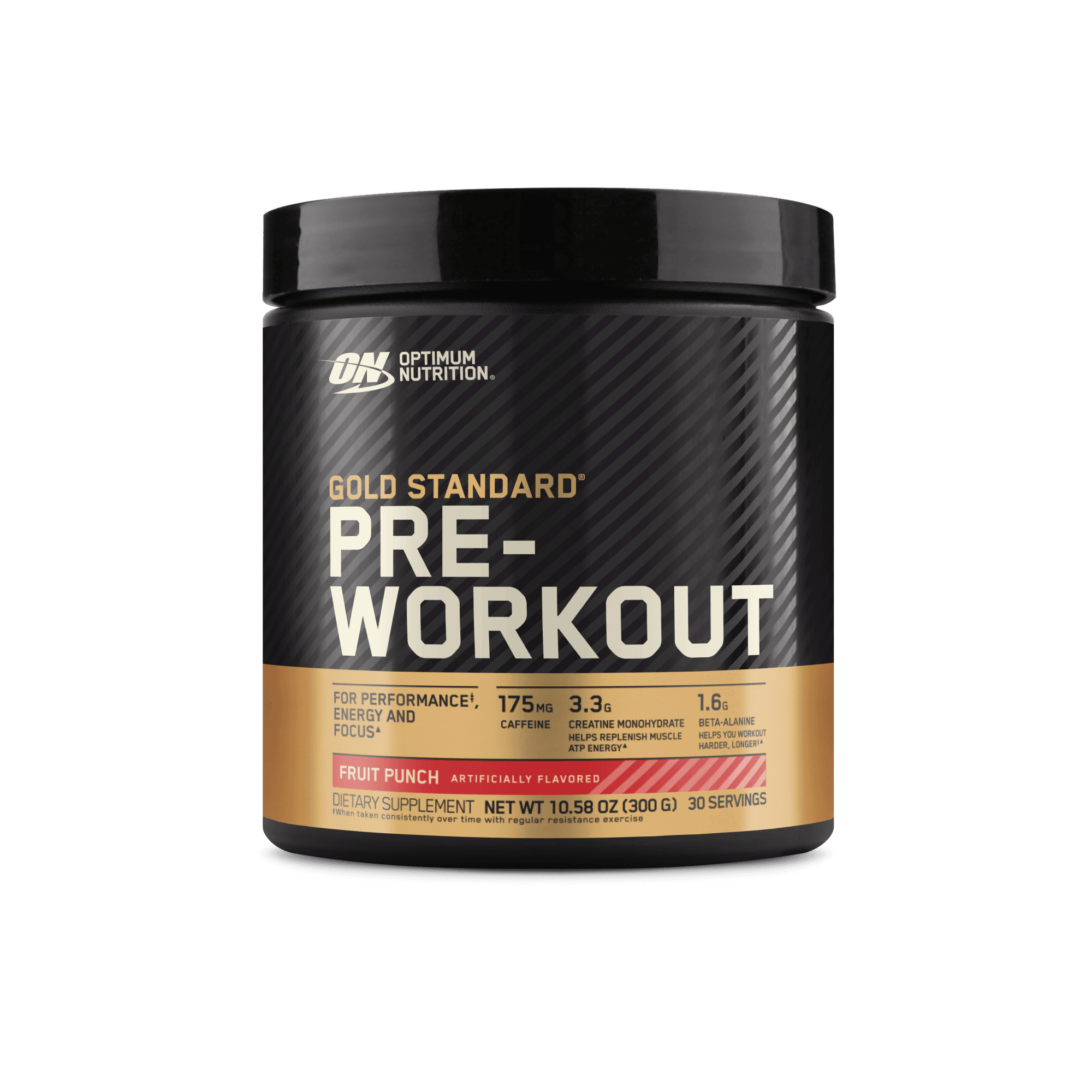
- Start with lower caffeine — 100-150mg products like C4 Original or ON Gold Standard Pre
- Look for transparent labels — Avoid "proprietary blends" that hide ingredient doses
- Don't chase the strongest option — You can always increase stimulant load later; you can't un-take a high-stim pre-workout
- Consider a stim-free option if you're caffeine-sensitive or train in the evening
Common Beginner Mistakes
- Taking too much too soon — Always start with a half scoop to assess tolerance
- Taking it on an empty stomach — This amplifies side effects. Have a light snack 30-60 minutes before
- Using it every single day — Cycle on and off to prevent caffeine tolerance buildup
- Expecting magic — Pre-workouts enhance good training; they don't replace it. Nutrition, sleep, and programming matter more
Side Effects to Watch For
- Jitters/Anxiety: Too much caffeine. Lower the dose or switch to a lower-stim option
- Tingling (Paresthesia): From beta-alanine. Totally harmless, fades with time
- Upset stomach: Take with food, ensure adequate water, or try a different product
- Insomnia: Caffeine too close to bedtime. Cut off caffeine intake 6+ hours before sleep
The Bottom Line
Pre-workout supplements can meaningfully enhance your training when used correctly. Start conservative, choose transparent products, and remember that supplements are the cherry on top of solid nutrition, sleep, and programming — not a replacement for any of them.
Ready to find your first pre-workout? Check out our product reviews or start with our top picks for beginners.
Recommended Pre-Workouts
As an Amazon Associate we earn from qualifying purchases.
Related Articles
Creatine vs Pre-Workout: What's the Difference? (Which Do You Actually Need?)
Creatine and pre-workout do completely different things. One builds muscle over time, one boosts performance acutely. Here's how to decide which — or both — is right for you.
February 22, 2026
Read more →
Pre-Workout on an Empty Stomach: Should You? (The Real Answer)
Taking pre-workout on an empty stomach means faster absorption and stronger effects — but also higher risk of nausea and GI issues. Here's the full breakdown.
February 21, 2026
Read more →